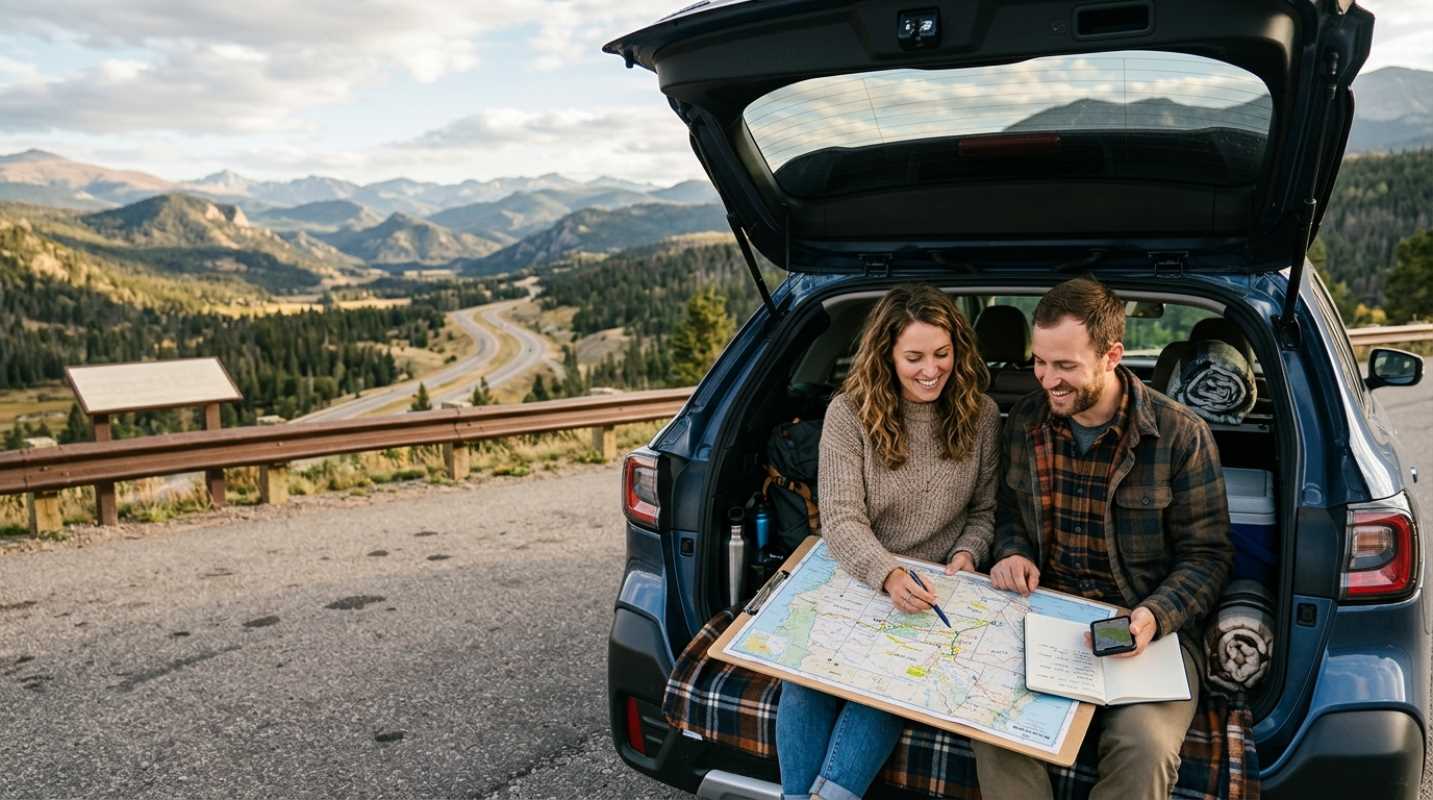
Have you ever stared at a highway map and felt that sudden, irresistible urge to just start driving? You definitely aren't alone. It's 2026, and the classic American road trip is having a massive moment. According to the Hilton 2026 Trends Report, a striking 71% of Americans plan to drive on their next vacation.¹ Hertz data backs this up, showing that 64% of us are planning a summer road trip. People are flocking to historic routes, with bookings up 8% on Route 66 and 14% in New England as travelers gear up for America's 250th anniversary.
But crossing state lines isn't just about queuing up a great playlist and buying a giant bag of beef jerky. A truly great multi-state adventure requires a delicate mix of smart planning and loose boundaries. If you over-schedule, you'll end up exhausted. If you under-plan, you might find yourself sleeping in your car at a closed rest stop.
Mastering the Logistics of a Multi-State Road Trip
Before you even key an address into your GPS, you need to decide what kind of traveler you actually are. Are you trying to cover as much ground as humanly possible, or do you want to wander?
This is the classic choice between rapid transit and slow travel. Rapid transit is great if your goal is simply getting to a far-off destination. Slow travel treats the road itself as the destination. Be honest with yourself and your travel partners about this early on, because mixing these two styles in one car is a recipe for a very tense trip.
Next comes the budget. Fuel prices fluctuate wildly across state lines, and highway tolls can sneak up on you. You'll want to budget for three major areas
• Fuel and Tolls: Use online calculators to estimate your gas costs, and always add a 15% buffer for detours.
• Lodging: Decide if you're booking hotels, camping, or winging it.
• Food and Fun: This includes groceries, diners, national park passes, and emergency coffee runs.
Finally, let's talk about your vehicle. Don't skip the pre-trip inspection. Getting your oil changed, tires rotated, and brakes checked before you leave is non-negotiable. A breakdown in your driveway is an annoyance, but a breakdown in the middle of a desert crossing is an expensive nightmare.
Strategic Route Planning for Maximum Adventure
How do you design a route that keeps everyone happy? It's all about finding the sweet spot between efficiency and discovery.
If you rely solely on standard navigation apps, you'll miss the best parts of the country. Standard GPS is designed to get you from point A to point B as fast as possible, which usually means boring, gray interstates. Instead, try routing along federally designated National Scenic Byways. These roads might add an hour to your trip, but they offer incredible views and local flavor.
You also need to keep an eye on state-specific road conditions. Construction season is a real threat, and mountain passes can close unexpectedly due to weather. Driving through mountainous states like Colorado or Montana takes much longer than driving the same distance across flat plains, so account for steep grades and winding roads when estimating arrival times.
The golden rule of multi-state road trips is simple: don't over-schedule your daily drive time. Travel experts suggest sticking to the 4-to-6 hour rule.³ This means limiting your active driving to a maximum of 4 to 6 hours per day, which is roughly 250 to 300 miles. This leaves you plenty of daylight to explore roadside sights, grab lunch at a weird diner, and arrive at your hotel before you're too tired to enjoy the evening.
Creating Your Perfect Road Trip Itinerary
When you're crossing multiple states, you'll be tempted to see absolutely everything. Resist this urge. If you try to do too much, your trip will feel like a military march.
Instead, pick two or three major "must-see" landmarks as the anchor points of your trip. Everything else should be treated as a flexible option. If you find a quirky roadside museum or a stunning local park, you want to have the freedom to stop without worrying about missing a strict check-in time.
To keep your sanity, try using the hub-and-spoke approach.⁵ Instead of packing up your bags and moving to a new hotel every single night, book a central base camp for two or three nights. From there, take short day trips to nearby attractions. It's much easier on your energy levels, and you'll actually get to know the area.
Remember to balance your days. If you have an activity-heavy day of hiking or sightseeing, follow it with a relaxed day of driving and light exploring. And if you're visiting popular national parks like Zion or Yosemite, remember that campgrounds and entry passes often need to be booked five to six months in advance. Keep your bookings flexible by using platforms that offer free cancellation, allowing you to change your route if you fall in love with a town or run into bad weather.
Needed Gear and Tech for Seamless Cross-Country Travel
The right technology can transform a stressful drive into a smooth journey. You don't want to rely on a single app for everything. Instead, build a smart digital toolkit.
Start with Roadtrippers, which is the gold standard for route planning because it lets you plot up to 150 stops.² It's perfect for finding those weird, offbeat attractions you'd otherwise drive right past. For navigation, always download offline maps on Google Maps or Apple Maps. You'll lose cell service in rural areas and national parks, and offline maps are a safety needed.
Here are some top digital tools to keep in your rotation
• Drive Weather: This app overlays real-time weather forecasts directly onto your route, helping you avoid bad storms.
• GasBuddy: Perfect for finding the cheapest fuel prices along your route.
• iExit: Tells you exactly what food, gas, and lodging options are waiting at upcoming highway exits.
• Autio: A location-based audio app that narrates local history and stories as you drive past landmarks.⁴
• AllTrails: Great for finding quick hikes and scenic viewpoints to stretch your legs.
Beyond the digital world, you need physical gear. Always carry a physical road atlas, like a Rand McNally. If your phone dies or breaks, paper maps are your ultimate backup. Pack a solid emergency kit with jumper cables, a flashlight, first-aid supplies, and plenty of extra water.
Pro Tips for Staying Comfortable and Sane on the Road
Even the most beautiful drive can turn sour if you're uncomfortable. Staying sane on a long trip is all about organization and self-care.
Keep your car organized by packing a dedicated grab bag for the front seat. This should hold your snacks, phone chargers, wet wipes, and extra layers of clothing. You don't want to be digging through the trunk on the side of the highway just to find a jacket or a pair of sunglasses.
Fatigue is your biggest enemy. To stay sharp, plan regular rest stops every two hours, even if it's just to stretch your legs for five minutes. If you're traveling with others, set up a clear schedule for driver swaps.
Most importantly, learn to embrace the unexpected. You might get a flat tire, hit a massive traffic jam, or run into bad weather. It's all part of the adventure. The best road trip stories rarely come from the parts of the trip that went exactly according to plan.
Sources:
1. Hilton 2026 Trends Report
https://stories.hilton.com/2026-trends/the-us-road-trip-returns
2. Roadtrippers Multi-State Road Trip Guide
https://roadtrippers.com/magazine/planning-a-multi-state-road-trip-best-apps-and-tools-in-2025/
3. Napier Outdoors Road Trip Planning Guide
https://napieroutdoors.com/blogs/news/10-steps-to-plan-a-perfect-road-trip
4. Autio Best Road Trip Apps
https://autio.com/here-and-there/best-road-trip-apps-2026
5. Reddit Roadtrip Planning Thread
https://www.reddit.com/r/roadtrip/comments/1qmwbj9/how_do_you_plan_multistop_trips_without_losing/